The Great LinkedIn Performance: When Everyone Sounds Credible, Who Actually Is?
Over recent years, there has been a meaningful shift in career advice. The conversation has moved from build your career to build your personal brand.

Over recent years, there has been a meaningful shift in career advice. The conversation has moved from build your career to build your personal brand.

For a decade, AI in hiring worked for one side of the table. Employers had resume parsers, keyword filters, ranking algorithms and automated rejections. Candidates

In the age of intelligent machines, the real competitive advantage isn’t working longer—it’s working wiser. A Morning Rewritten On a rainy Tuesday morning in London,

In partnership with Fama. Hiring has never been just about skills. The best organizations have always looked beyond résumés to answer bigger questions: Will this

When Isaac Asimov wrote his three laws of robotics in the 1940s, he was writing science fiction. But the problems he was trying to solve

Every day, I am contacted by AI vendors promising the Talent Acquisition Utopia. A world where job titles are uploaded into an ATS which automatically

The current landscape for workforce development is heavily influenced by substantial industrial growth and technological disruption. Talent acquisition and human resource development (HRD) leaders are

In the race between automation and empathy, the future of HR will not be decided by machines—but by how wisely we use them. The Day

Talent Acquisition (TA) leaders today are increasingly tasked with a difficult dual mandate: accelerating the speed of hire while simultaneously elevating the quality and diversity

AI hiring operations are changing recruitment faster than most talent teams expected. Companies now expect faster hiring, better candidate experiences, and stronger operational efficiency at

We know that organizations are investing heavily in AI, and we also know that most are not seeing the transformation they expected. What we have

The danger of AI in HR is not that it will replace human leaders. It’s that human leaders, awestruck by its capabilities, will replace themselves.

Every recruiter who has opened their ATS in the past year has felt it: something has shifted. The applications look different. They read smoother, hit

Artificial Intelligence is changing the way companies work faster than most organizations are prepared for. In high-growth companies, this pressure is even stronger. Leaders are
AI resume screening tools are quietly eliminating qualified candidates in technical hiring — especially in supply chain and manufacturing. These roles are already among the
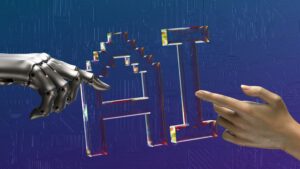
According to McKinsey, 88 percent of organizations now use AI in at least one business function. But employee engagement remains stubbornly low globally, with Gallup

For half a century, middle management was the backbone of corporate life – the “human glue” translating strategy into tasks, coordinating departments, and enforcing consistency.

Not long ago, talent sourcing meant long nights scrolling through resumes and LinkedIn profiles, hoping the right name would jump off the screen. Today, Artificial

When Training Budgets Shrink and AI Budgets Grow, Human Investment Matters More Than Ever A trend is evident across organizations: budgets are tightening, and

How many times are we going to hear that we’re operating in a persistent state of disruption? More than any human can count, that’s for

When most people think of HR, they picture hiring, firing, policy enforcement, and a department tasked with making work feel better, while the rest of

The traditional organizational chart is dying. In its place, a new structure is emerging, one that’s inspired by an unlikely creature: the octopus. An octopus’s

You’re in your manager’s office, resignation letter in hand, heart racing. You say the line you’ve rehearsed for months: “I quit.” You grab your pot

We are living in a persistent state of disruption. And that’s being nice about it. While the business world has spent the last few years

Sponsored by SAP. As we wrap up another volatile year in the World of Work, it’s time to start forecasting where things are headed in