For most senior leaders, the value of executive coaching is well established.
According to an IIC Partners survey of 171 executives at large organizations, 80% believe executive coaching improves job performance.
Despite this strong endorsement, only 36% report having access to coaching through their companies — a gap that demands attention from any organization that claims leadership performance as a priority.
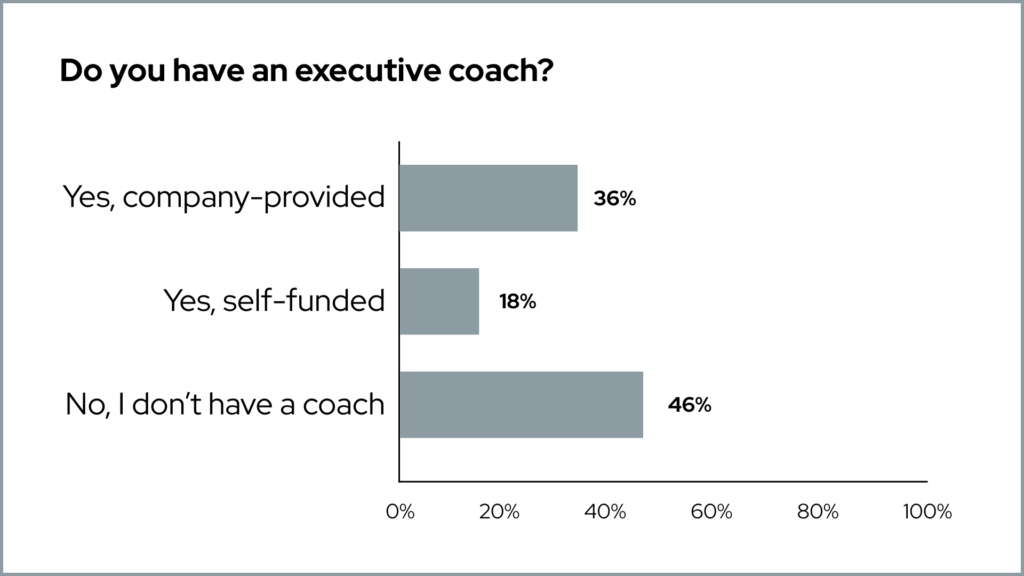
Access to Coaching Remains Limited
Many companies reserve coaching for a narrow group of senior executives; others offer it only to underperforming leaders, positioning it as a remedial fix rather than a driver of growth. In both cases, significant value is left on the table.
The good news is that employees are highly receptive to employer-provided coaches. Our survey revealed that 85% of leaders trust a company-paid coach to keep their conversations entirely confidential.
This data shows that the primary hurdle to wider coaching adoption is not employee buy-in. Instead, the challenge is whether organizations are prepared to make it available in a serious, consistent way.
Early Executive Coaching Delivers Results
Coaching delivers the most value when it begins early in an executive’s tenure. The first months demand rapid alignment, learning how decisions are made, understanding organizational behavior, and cultivating trust. Coaching gives leaders the space to evaluate their read of the business before early missteps become harder to unwind.
It also creates a structured space to work through judgment calls and reflect on any capability or leadership style blind spots. This is important in roles where early decisions carry outsized weight and a slow or uneven start can affect team confidence, execution, and retention.
Across our global offices, the most successful coaching programs are woven into onboarding, aligned with assessment insights, and extended as leaders progress, building more capable teams and increasing the likelihood of retaining top talent.
Coaching as a Strategic Retention Lever
Forty-three percent of executives have regretted a career move, citing a lack of career growth as a primary driver. Broader access to executive coaching changes this dynamic. Leaders who feel actively supported in their development are far less likely to regret career decisions and leave early in their tenure.
Moreover, embedding coaching into succession planning encourages retention and builds a robust leadership pipeline. High-potential executives who receive structured guidance before entering the C-suite develop the resilience and strategic agility required to succeed.
Ultimately, democratizing coaching brings substantial benefits to individual leaders, while also serving as a strategic defense against the high cost of executive turnover.
Global Trends That Are Driving Demand for Coaching
The modern workforce is facing several complex developments across technology, geopolitics, and business operations. These pressures are more intense and varied than ever before, making coaching a vital tool to help employees navigate these macro trends:
1. The Accelerating Pace of Work and Society
The pace and complexity of both corporate and personal lives are accelerating at an unprecedented rate. Businesses are operating with heavily compressed decision cycles, while society is grappling with fast-moving geopolitical shifts, economic concerns, and technology-driven overstimulation. When leaders operate in a perpetual state of overwhelm, long-term strategy and interpersonal relationships are the first casualties.
In this environment, executive coaching serves as a vital tool to create a structured, confidential decompression chamber where leaders can step back from daily volatility and process complex macroeconomic and societal developments.
2. The Rise of the Next-Generation of Leadership
Organizations are increasingly appointing first-time CEOs and board directors to expand talent pools and drive transformation.
While these executives often possess exceptional motivation, technical skills, and innovative perspectives, moving to both a higher functional level and a new organization present a steep learning curve. This complexity is compounded when leaders come from different industries.
Providing coaching to first-time appointments ensures they receive targeted, personalized support to successfully transition into the role.
3. The AI and Digital Competency Gap
The capabilities required of the modern workforce have fundamentally changed. Technological expertise and AI proficiency are now non-negotiable requirements. This shift has created an acute vulnerability: many employees have technical blind spots often paired with resistance to change, while executives are tasked with leading through uncharted AI territory.
Executive coaching provides the space for leaders at all levels to confront these capability gaps and soundboard change management approaches. A skilled coach helps executives advance their leadership styles, develop and track plans for personal upskilling, and successfully pivot into the digitally fluent strategists modern enterprises require.
Start With a Pilot Program and Scale Results
Securing a budget for large-scale coaching without clear ROI projections is a real hurdle, making data and positive case studies an essential first step.
Start with a six-month pilot involving diverse cohorts of new hires and existing employees, with performance tracking and checkpoint surveys built in. Then scale the most effective use cases, expanding investment as individual and team performance improve.
When organizations transform widespread buy-in into meaningful access to executive coaching, they unleash the full potential of their leaders, fuel innovation and agility, and build resilient, collaborative teams.
Post Views: 1,679